
Aesthetic Clinic Digital Management System
A comprehensive platform designed to streamline aesthetic clinic operations. By integrating medical records, scheduling, and LINE messaging, it transforms fragmented processes into a unified digital experience, elevating both efficiency and professional standards.
Client:
完美主義醫美
Role:
UX, UI Design
Date:
2025
Imagine a top-tier medical aesthetics clinic with a sophisticated vibe offering personalized services. However, the operations team struggles daily with post-operative follow-ups, record keeping, and managing medical histories, which affects their service quality.
Chaotic Daily Operations
Three Major Pain Points

Information Silos
Patient data, appointments, and surgical records are scattered, making organization time-consuming and prone to errors due to inconsistent information.

Fragmented Workflows
Each stage uses different tools and communication methods, resulting in a disjointed process that reduces efficiency and raises communication costs.

Lack of Standardization
Inconsistent recording tools lead to varying quality among consultants and physicians, affecting customer experience and posing legal risks from incomplete records.

Problem Statement
"How might we streamline fragmented workflows into a unified system, minimizing administrative overhead to empower medical teams to focus on patient care?"
User Flow
Assess the workflows of employees and doctors based on the different stages of customer visits.


Design Principles
I identified three key design insights from the clinic's workflows to guide the upcoming design strategy.
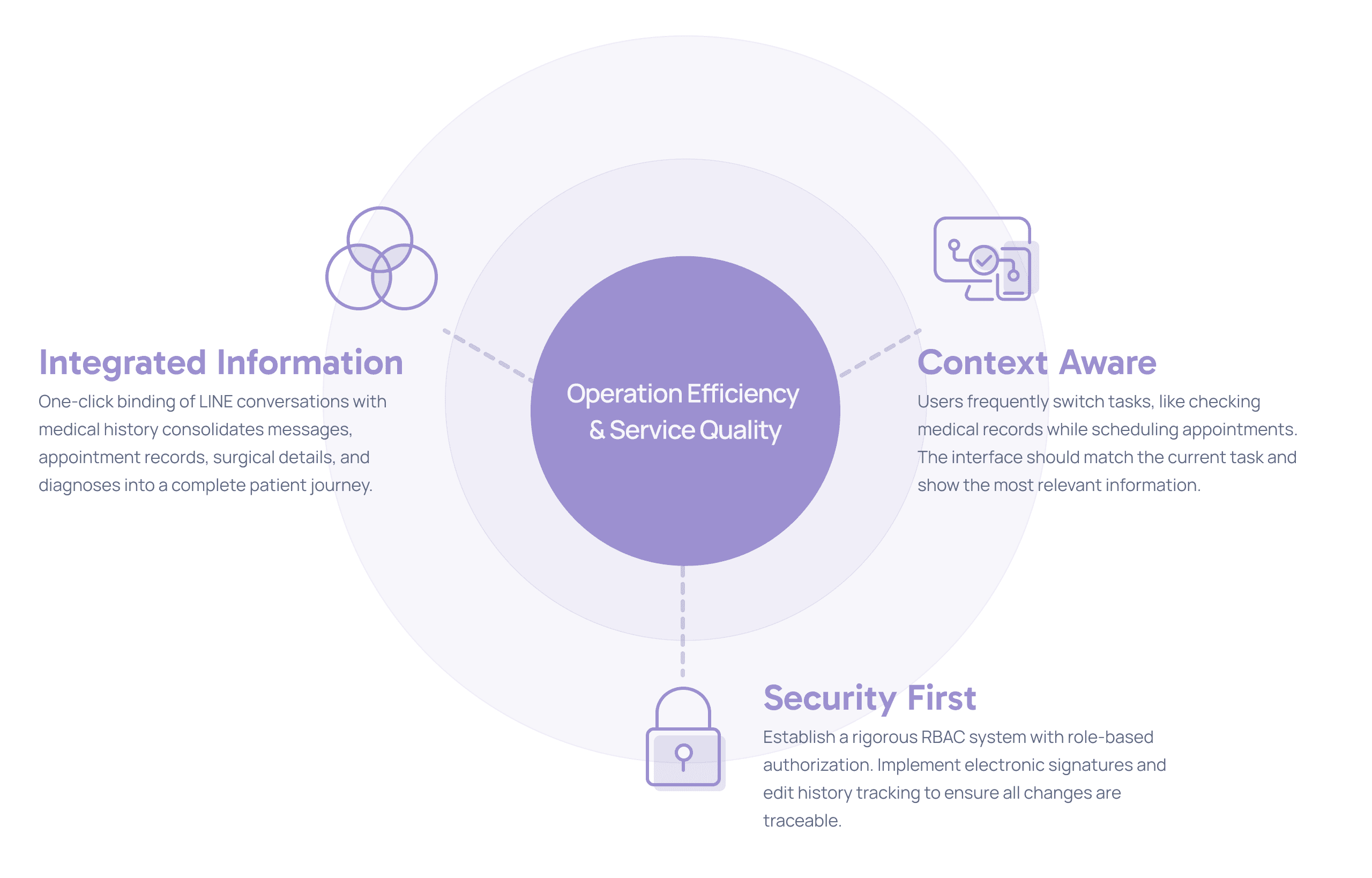
Context Aware
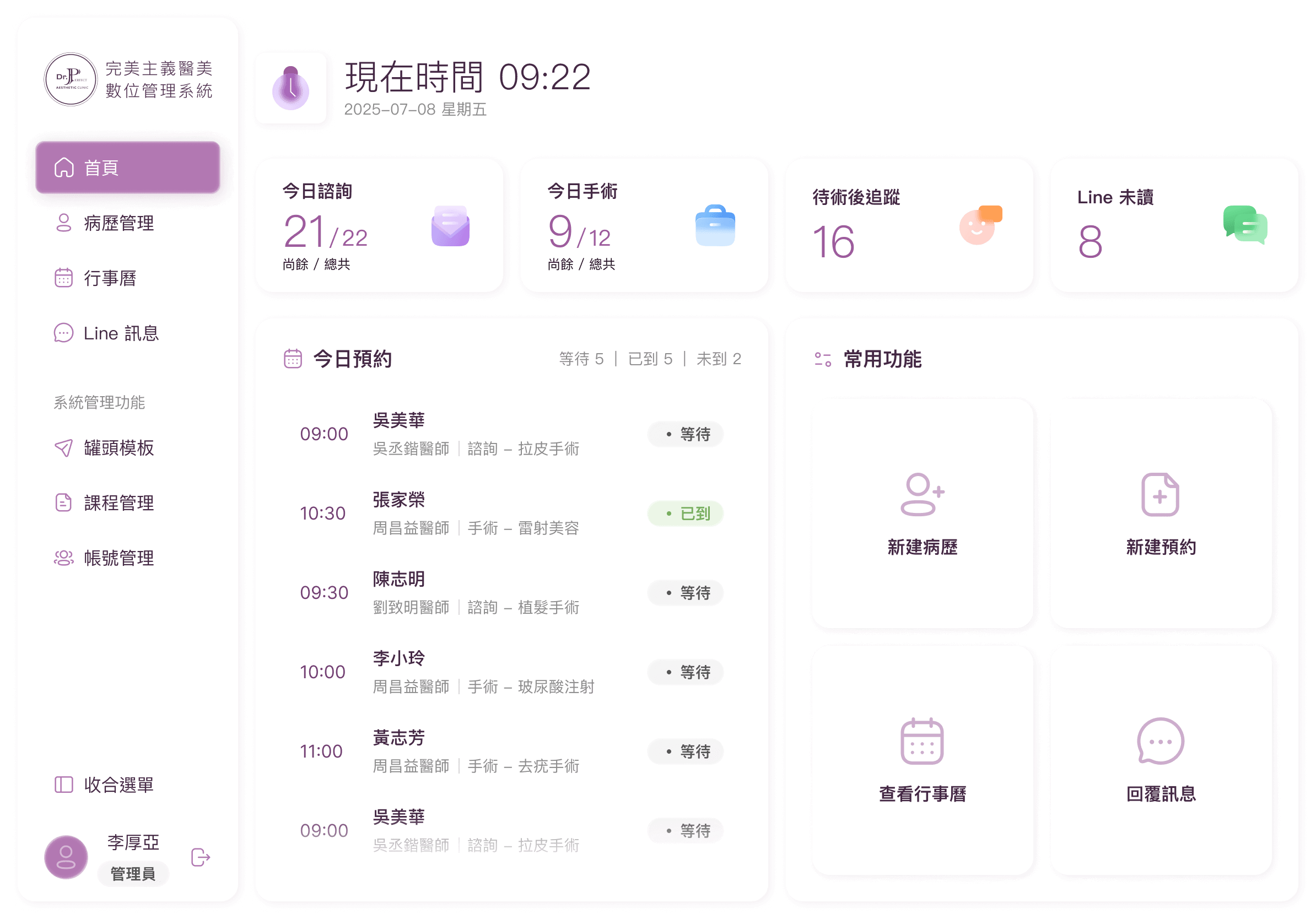
Dashboard: Key Info & Shortcuts
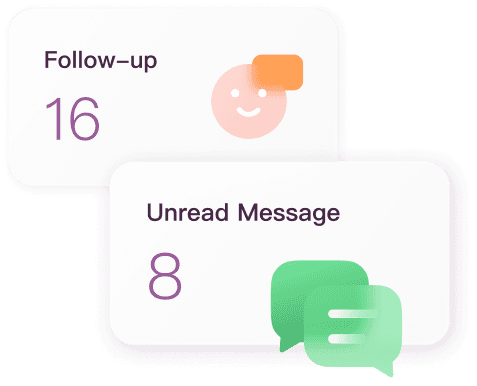
Quickly grasp daily operational figures and clearly understand today's workload.
Set the most frequent operations as quick access points for one-click actions to streamline daily workflows.
Context Aware
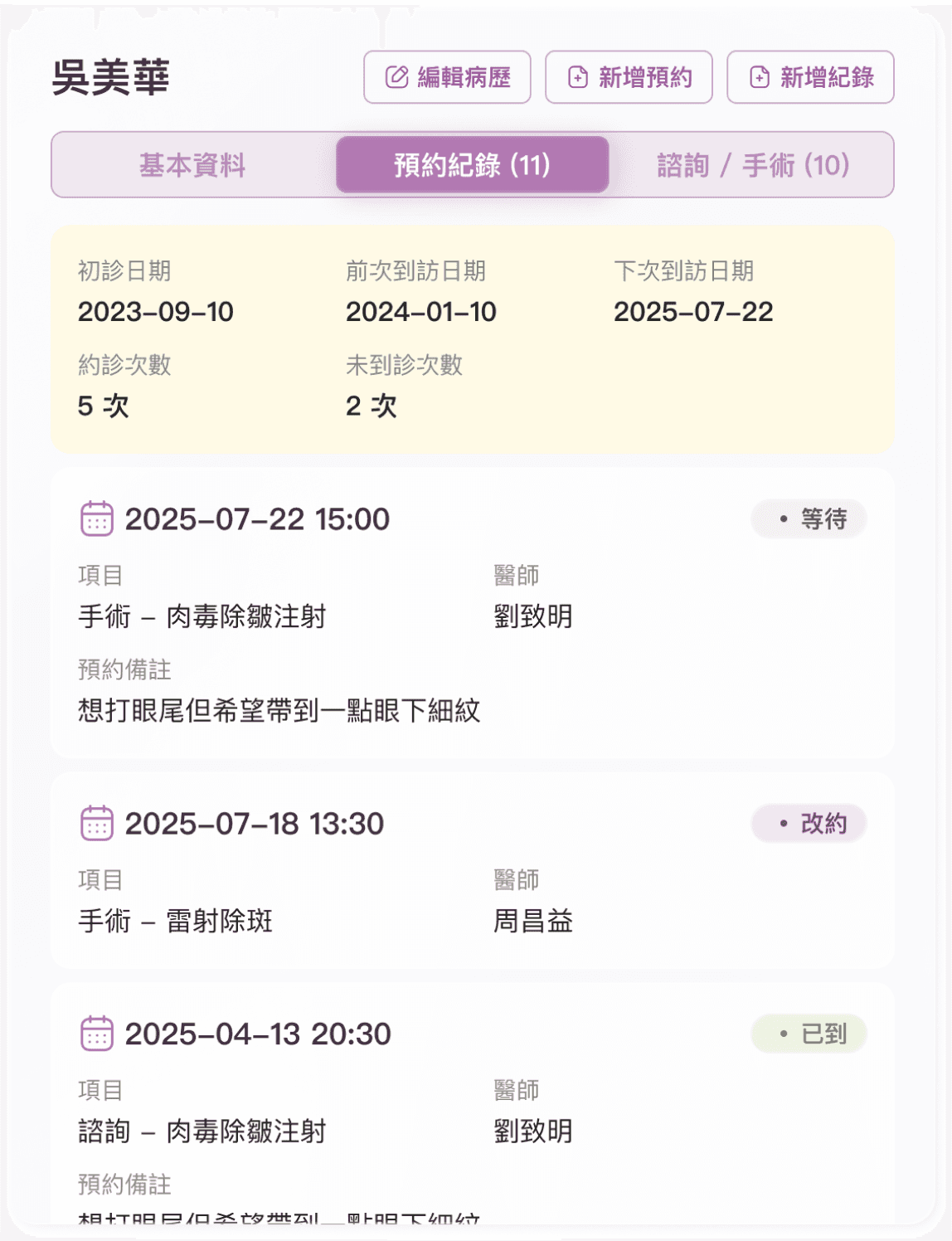
Patient-centered, 360-degree data integration
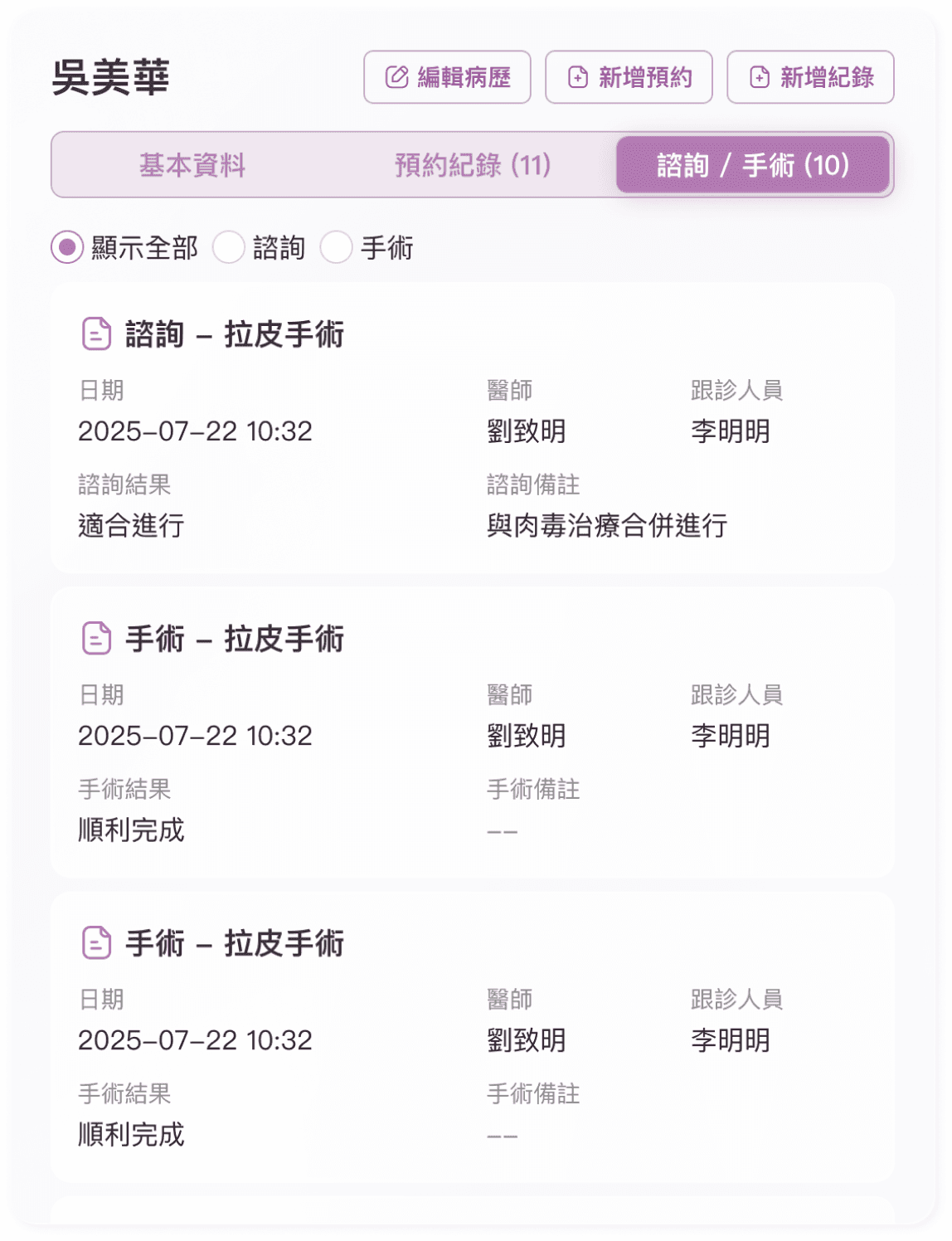
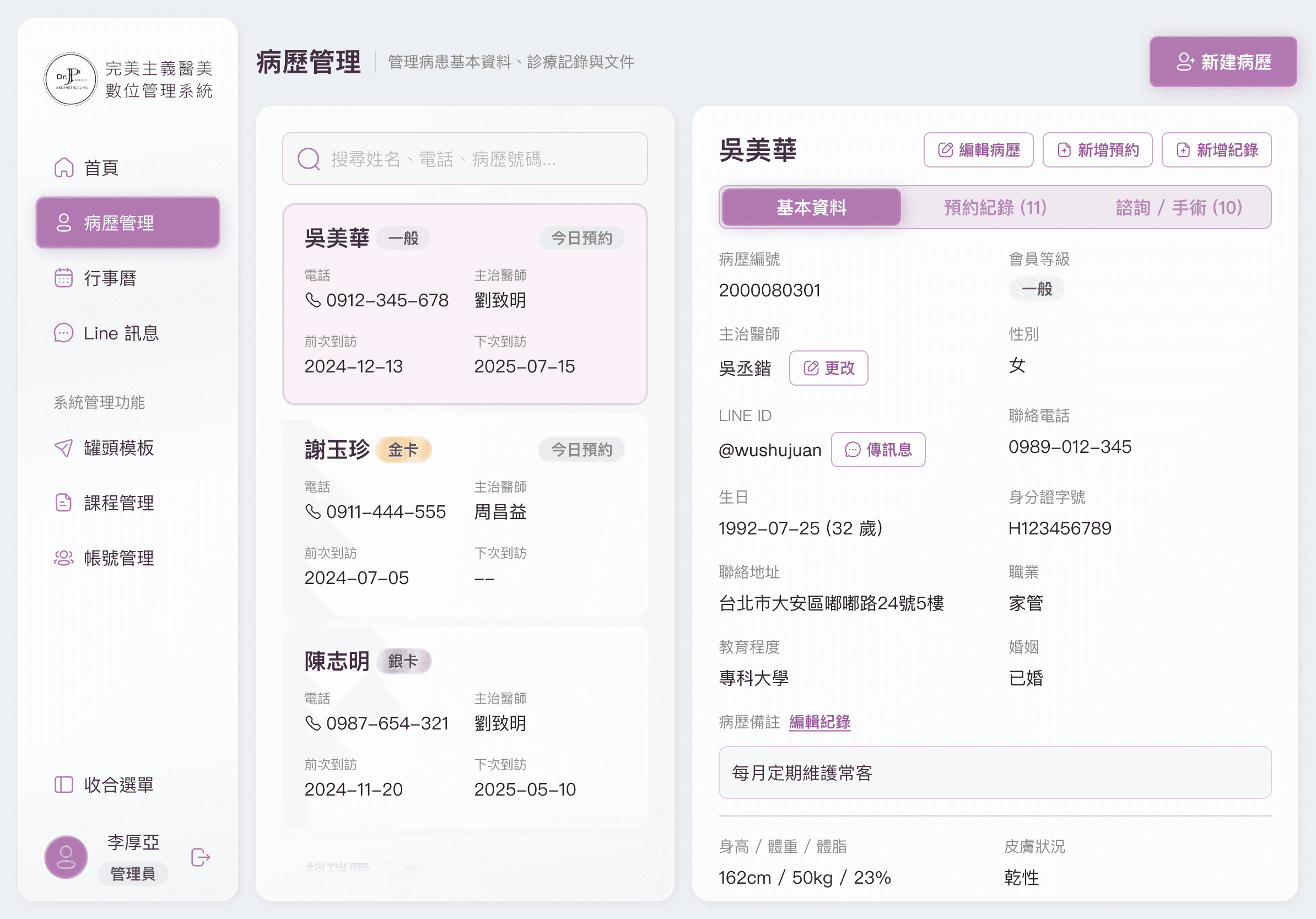
The column display allows staff to quickly switch between different patient information. Key details such as personal information, membership level, and primary physician are placed at the forefront. Additionally, a tabbed interface enables quick access to complete appointment records and integrates each consultation and surgery record.
Any actions taken from the patient page, such as adding an appointment or a consultation record, will automatically include the patient's information, reducing the number of steps and minimizing errors.
Please enter the consultation results
Insert Template
Assessment
Treatment
Results
Analysis
Risks
Combo/Dry, oily T-zone
Sensitive, visible redness
Surface spots, uneven tone
Deep spots, pigmentation
Eye wrinkles, visible bags
Integrated Information
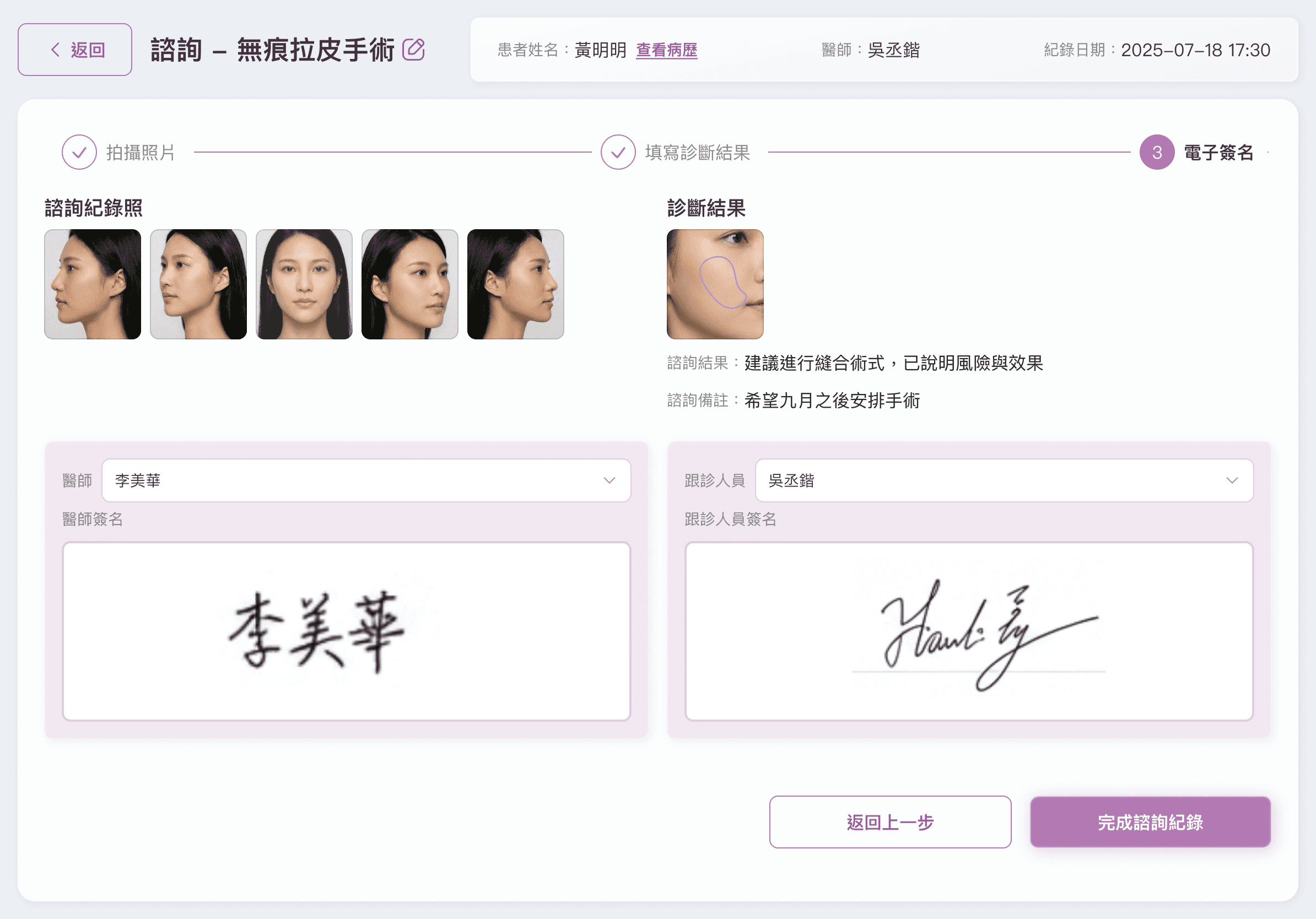
All-in-one consultation record process
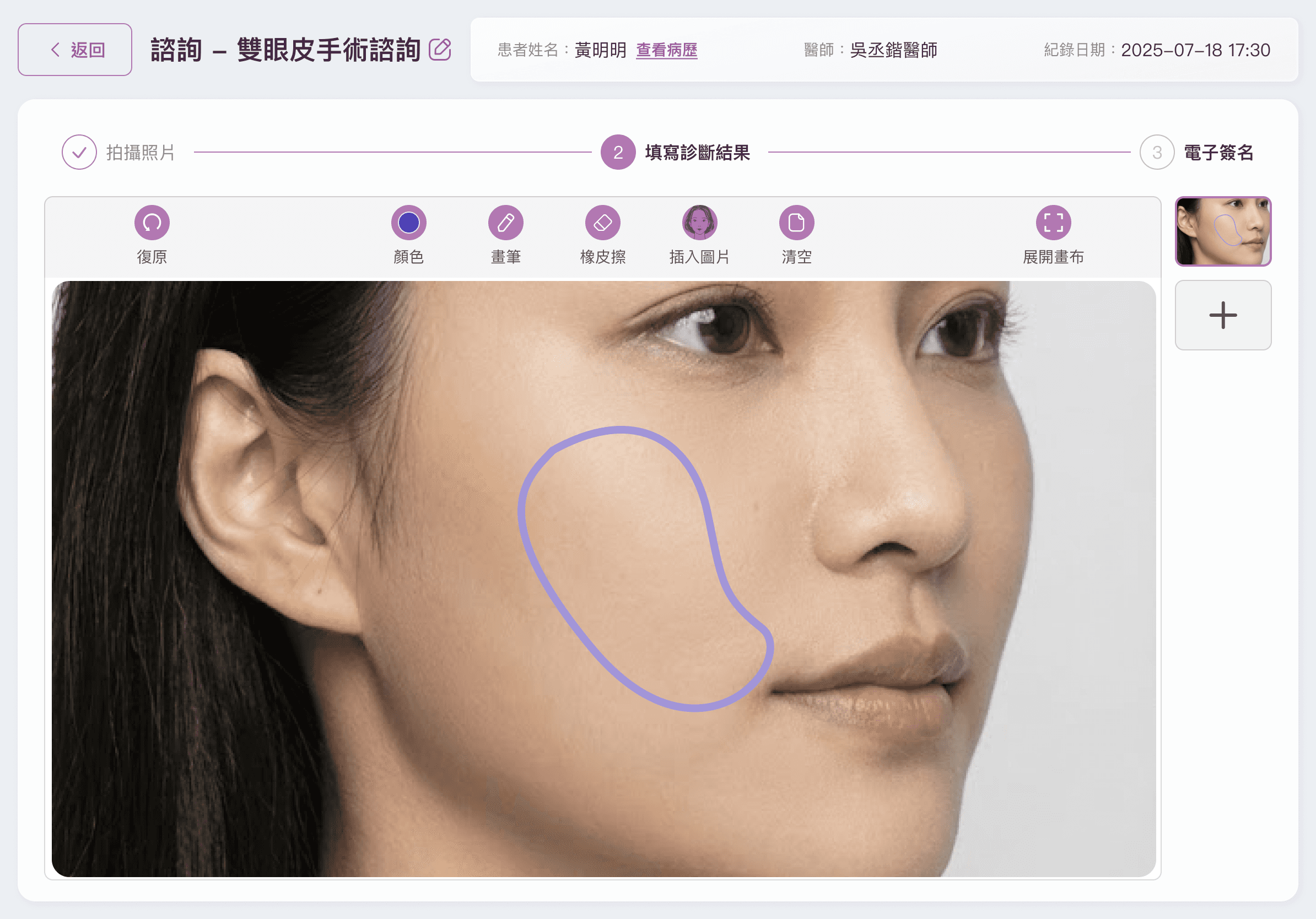
Consultation records used to be scattered across cameras, drawing software, and text editors, making organization and archiving tedious and error-prone.
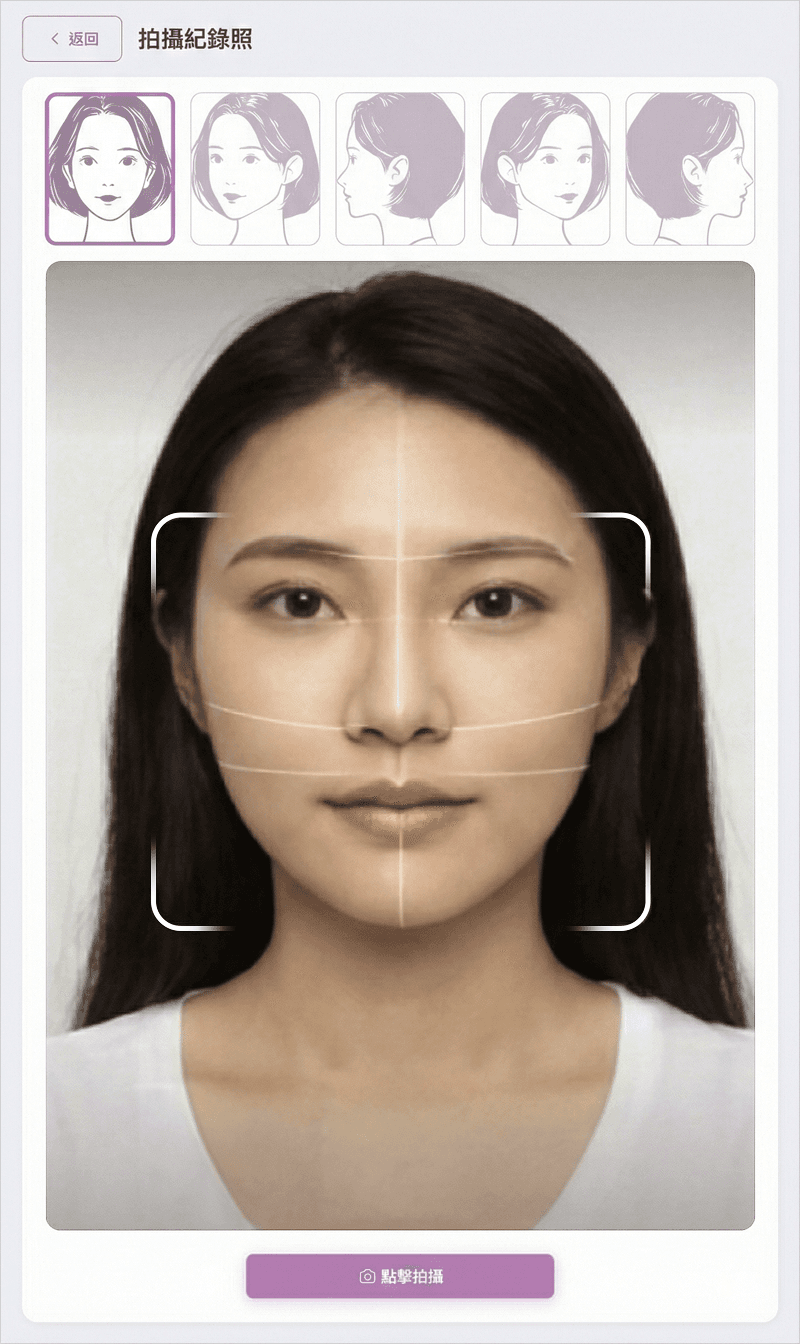
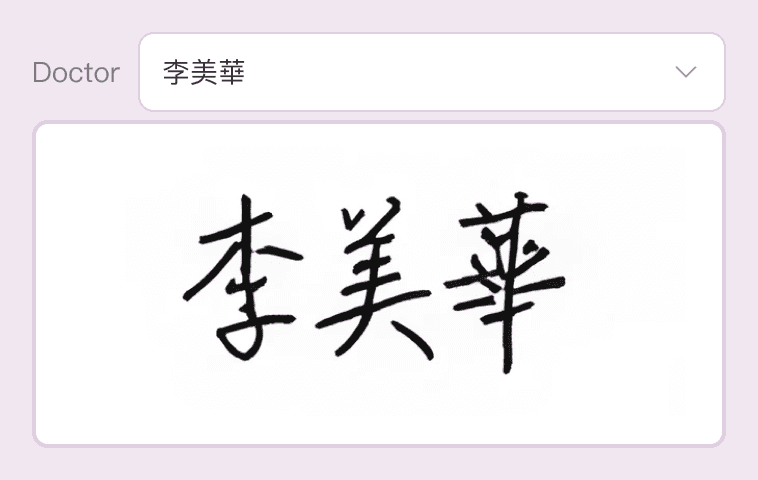
Our All-in-One consultation record process combines four key features: guided photography, image annotation, template text insertion, and electronic signatures. This ensures a seamless workflow while keeping records standardized, efficient, and legally valid.
Integrated Information
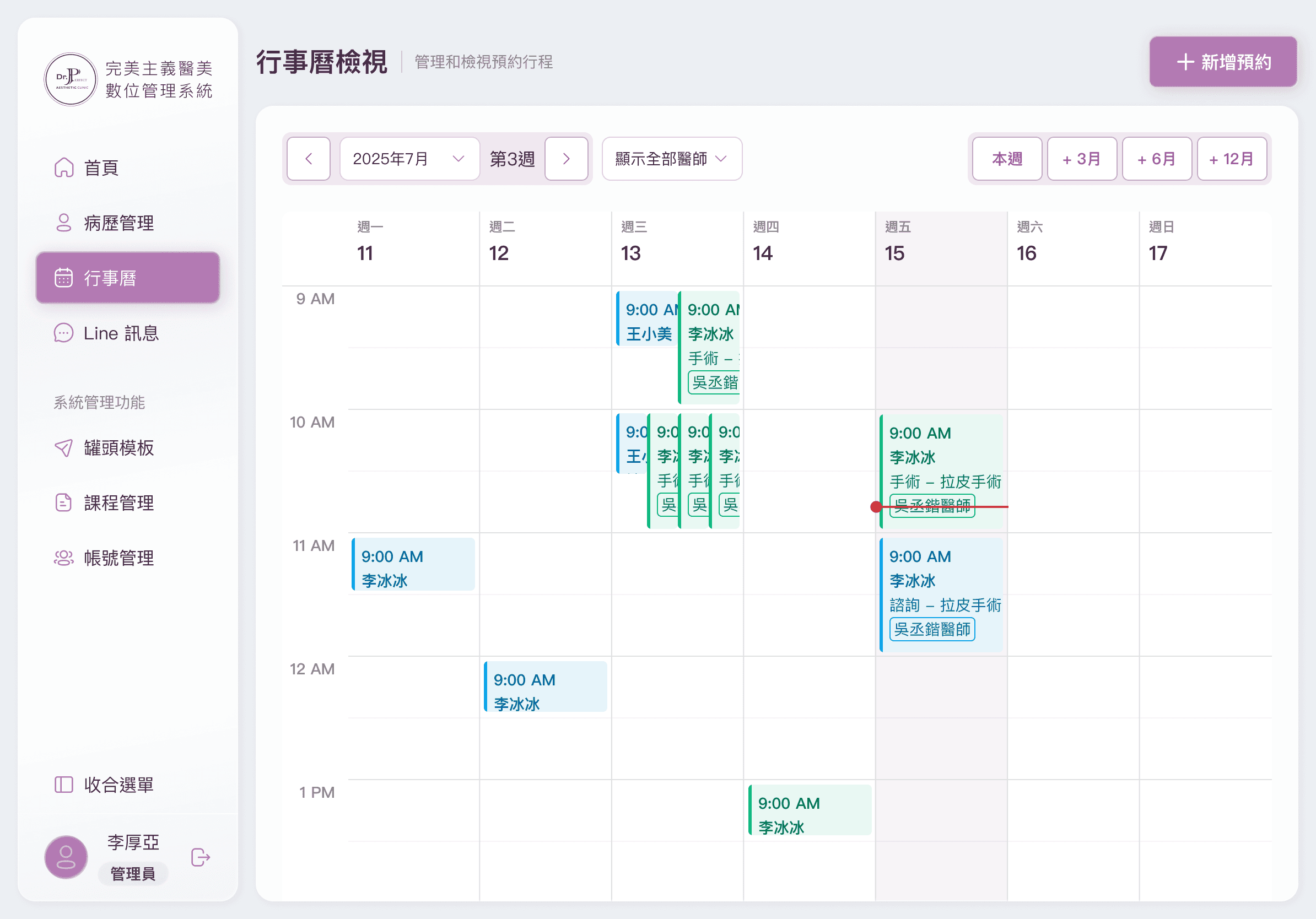
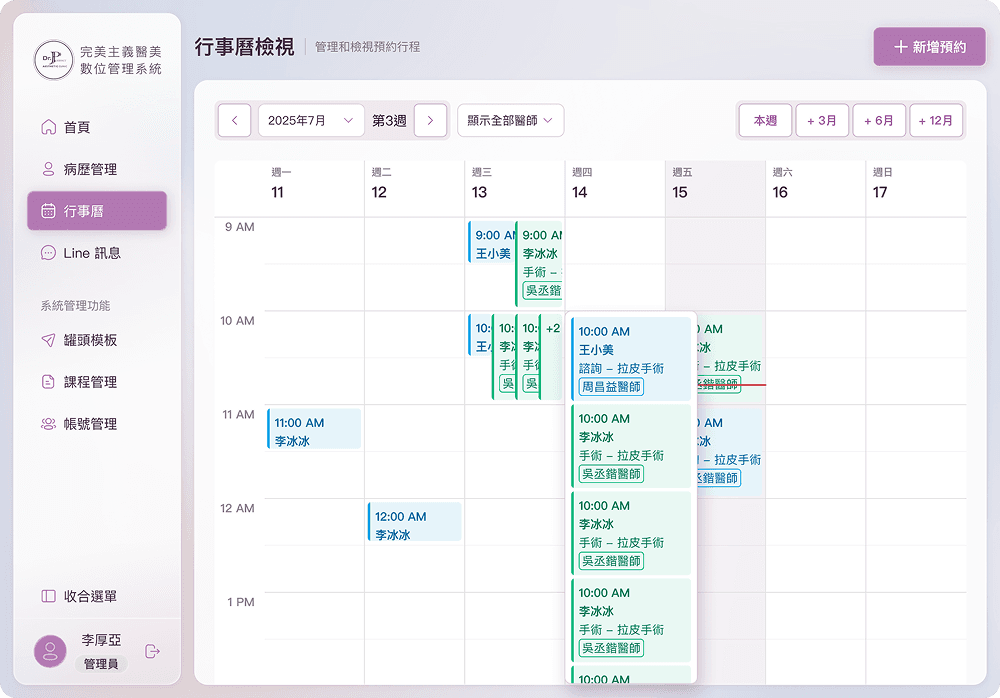
Flawless smart scheduling
In the past appointment process, front desk staff had to repeatedly switch between the appointment form and the physician's schedule, or confirm medical records back and forth.
I have integrated the appointment form into a visual calendar format with the appointment interface, automatically filling in data after selecting a patient, enhancing appointment efficiency and accuracy through automation and data display.
10:00
AM
Wang Xiaomei
Consult: Facelift
Dr. Zhou
10:00
AM
Li Bingbing
Surgery: Facelift
Dr. Wu
Security First
Access Control
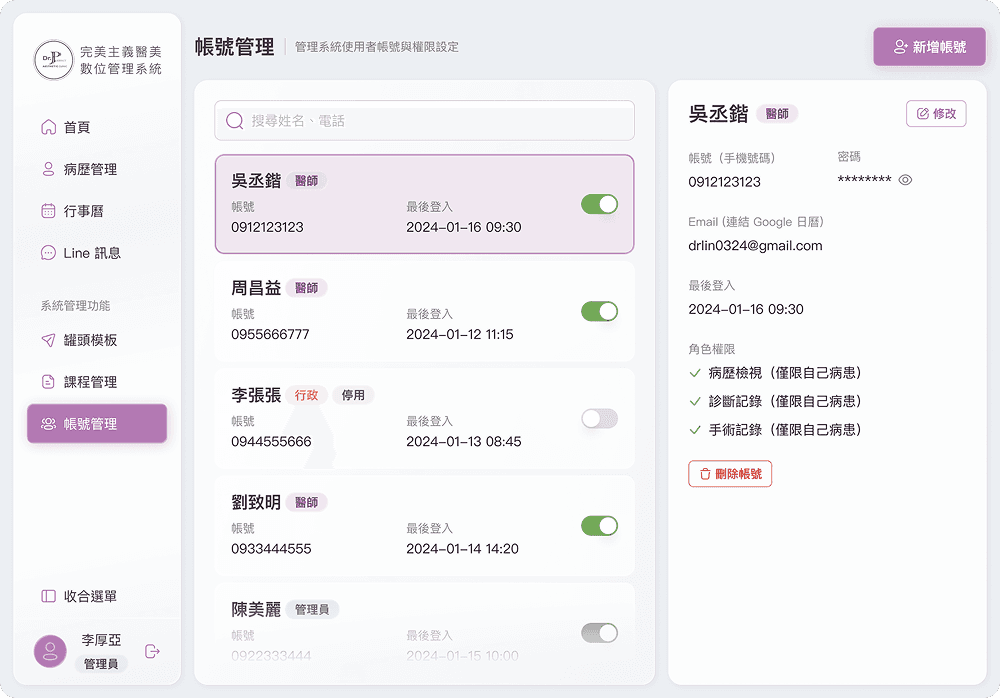
To protect patient information, I established a functional Permission Matrix during the planning phase. Through the RBAC model, we ensure that each member can only access data relevant to their role, achieving the security goal of "data minimization."
Module
👩💼 Admin
🙎♀️ Staff
👨⚕️ Doctor
🗓️ Calendar
✅
✅
View Only*

LINE Messaging
✅
✅
View Only
💬 Templates
✅
View Only
View Only
🩺 Health Records
✅
Basic Info Only
Clinical Data*
📂 Medical History
✅
View Only
Full Access*
📄 Course Management
✅
View Only
View Only
🔑 Account Management
✅
❌
❌
*Note: Doctors are restricted to accessing data of their assigned patients only to ensure maximum privacy
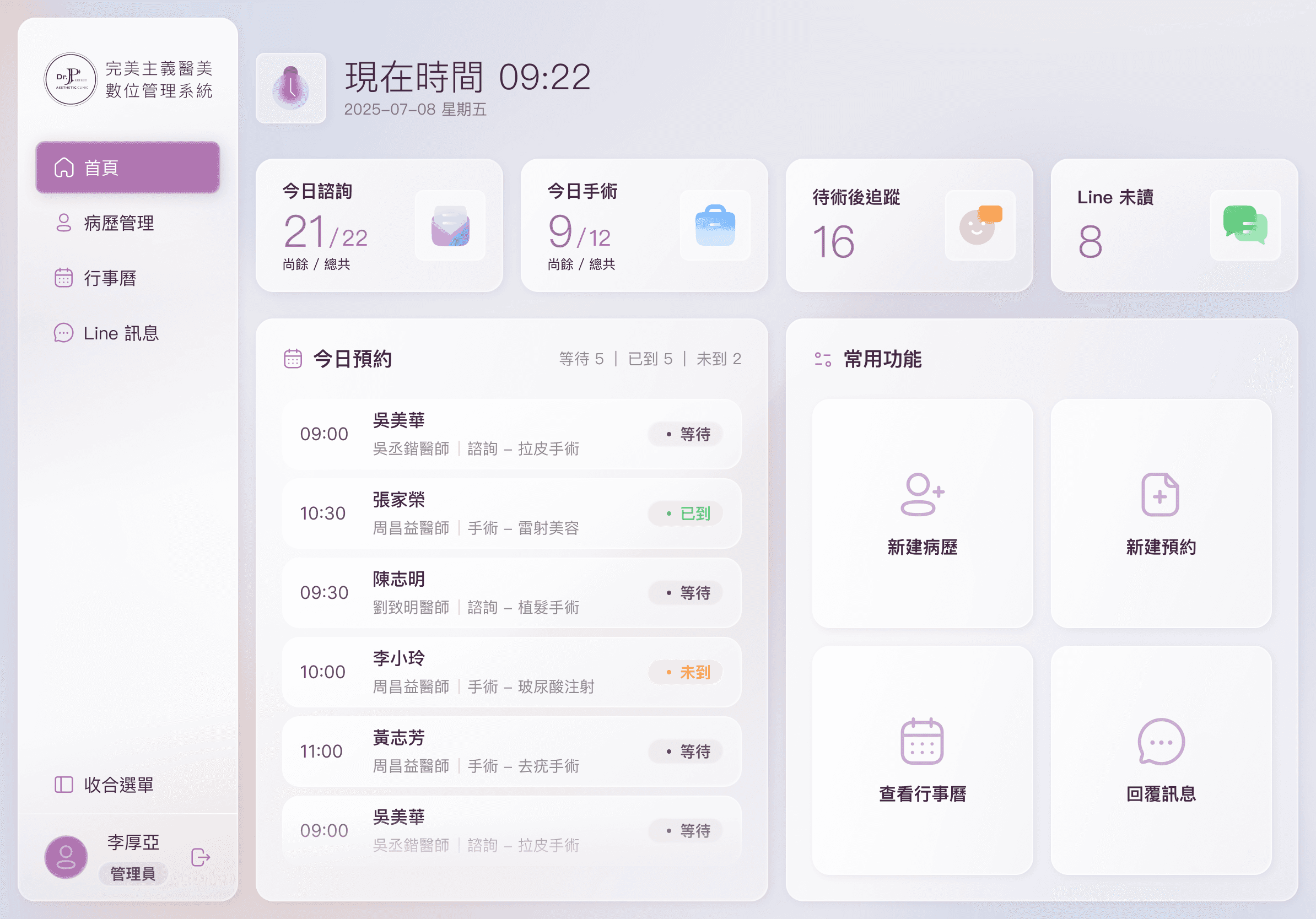
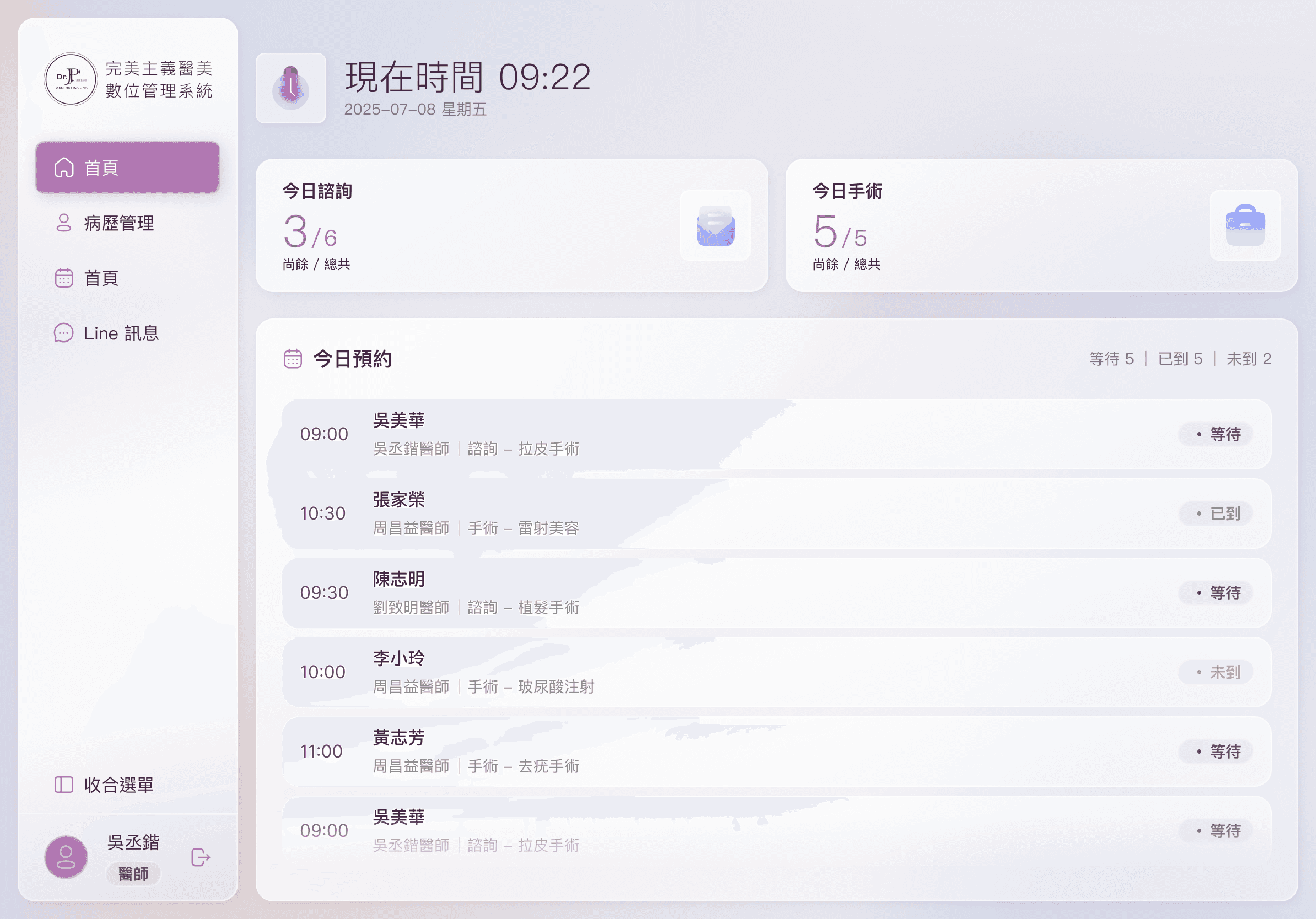
Display different dashboard based on permissions
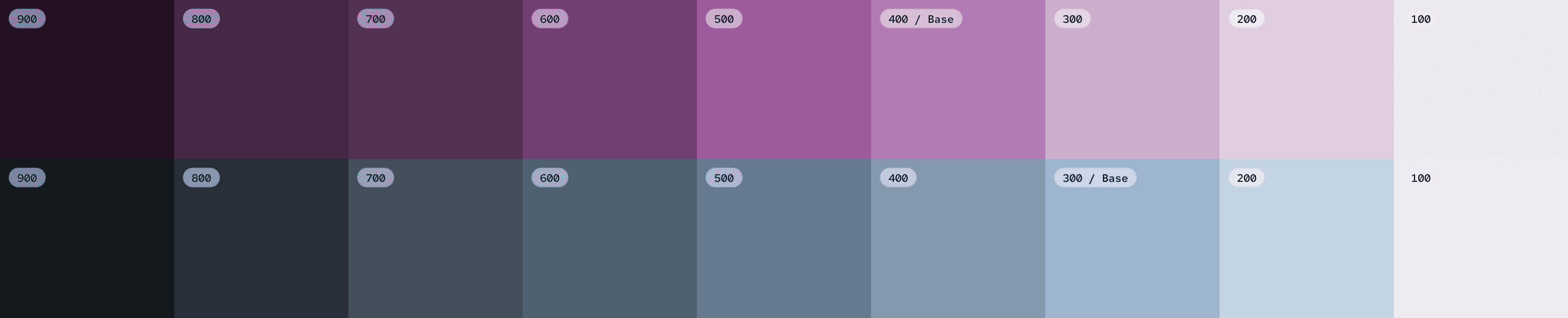
Design System:
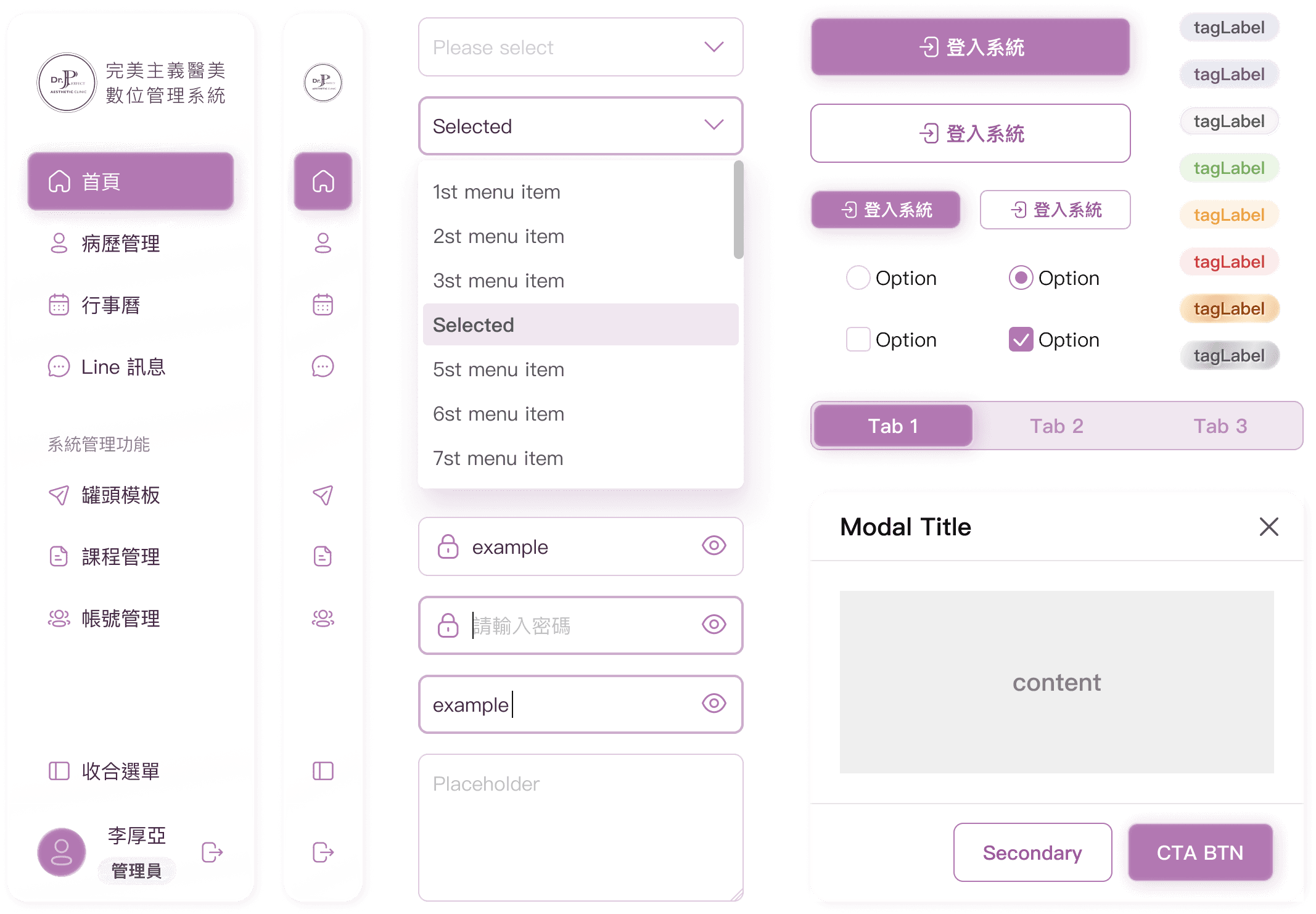
Establish scalable infrastructure
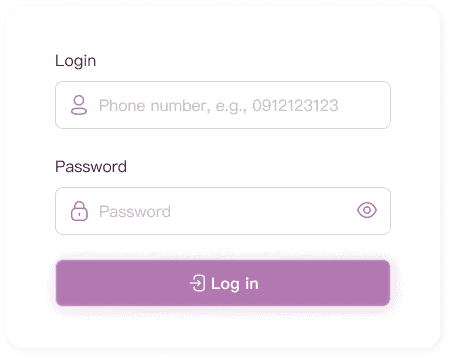
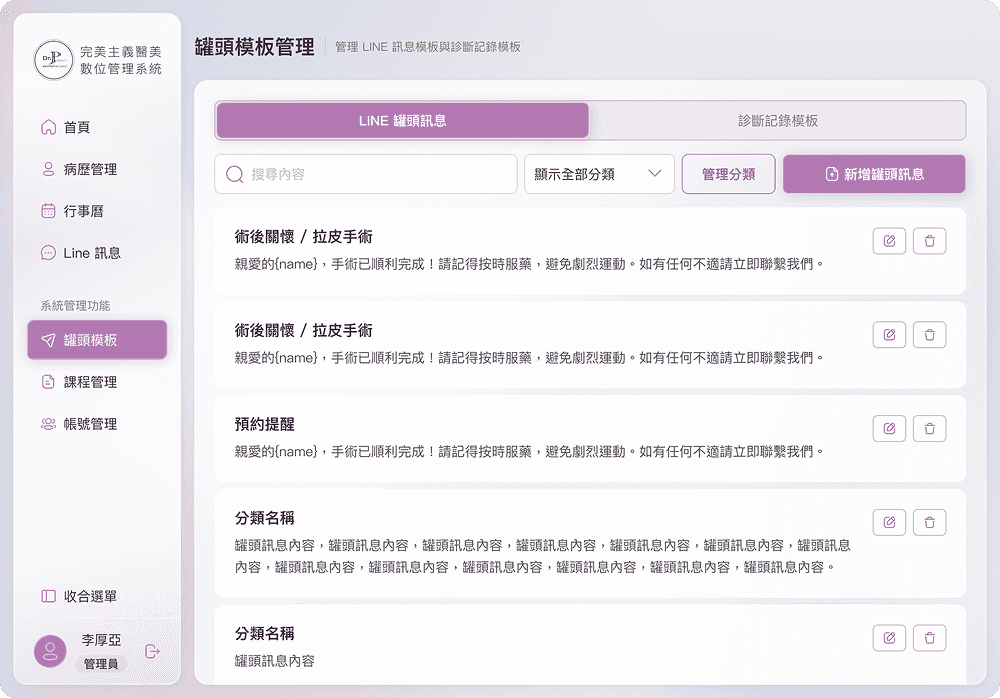
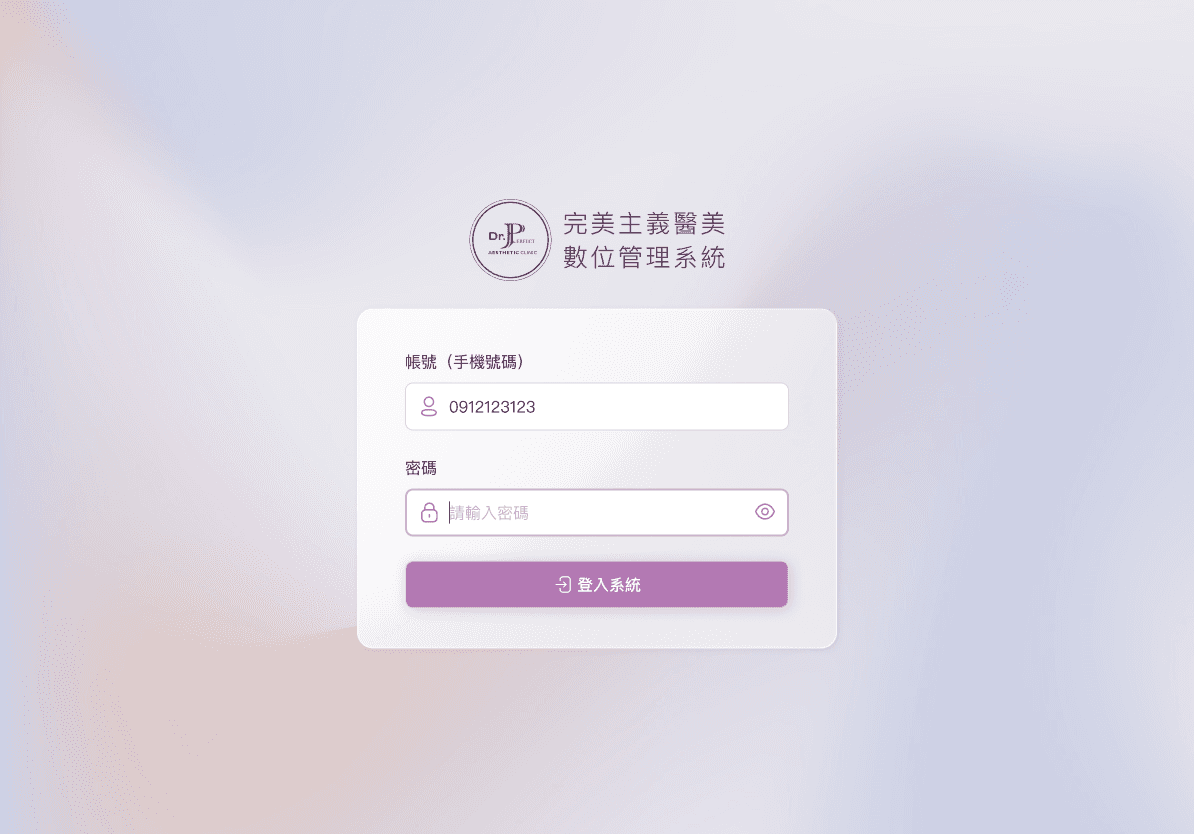
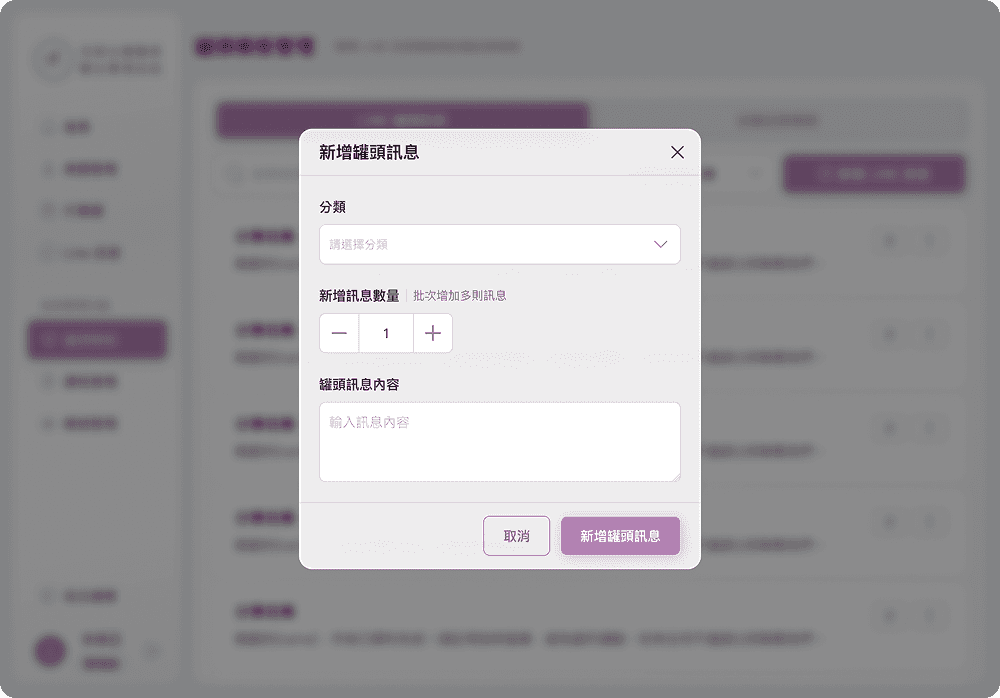
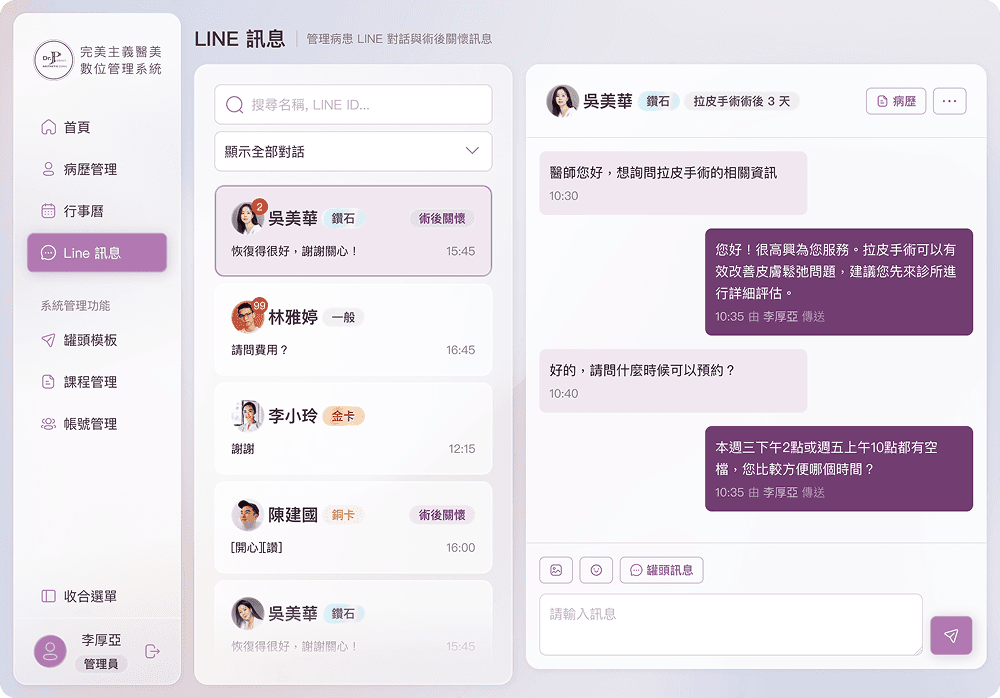
I always create a design system for each of my projects that goes from zero to one, gradually adding components as features expand. This helps me ensure consistency and scalability for each function while increasing efficiency during design and development.
Supplementary:
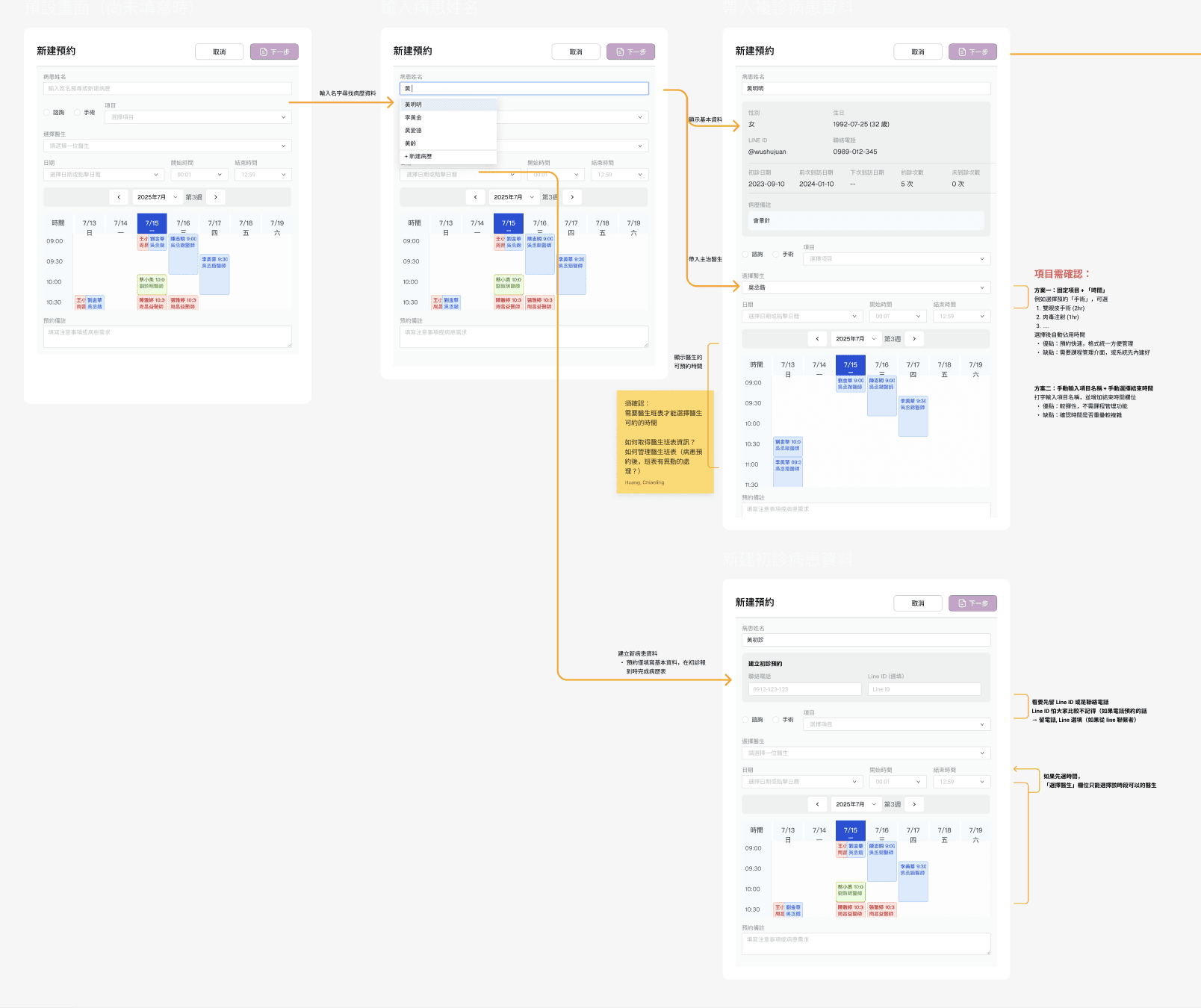
Accelerating Consensus via AI Prototyping
To bridge the cognitive gap between non-technical clients and development, I integrated AI tools to transform static wireframes into interactive prototypes. This not only brought complex operational flows to life but also significantly enhanced requirement validation and communication efficiency.
Projected Impact & KPI Targets
While the project is currently in the development phase, we have established KPIs to guide our success. Based on initial design validation and workflow analysis, we have set the following conservative targets for the system's first-phase implementation:
Operational Efficiency
Targeting an estimated 20-30% reduction in manual administrative time by streamlining core workflows, such as appointment scheduling and consultation logging.
Data Integrity & Compliance
Aiming for over 95% completion rates for critical documentation (e.g., pre-operative consents and consultation records) through standardized templates and integrated mandatory fields.
Patient Experience & Retention
Anticipating a 15-20% improvement in patient follow-up engagement by optimizing the post-operative care journey and reducing friction during the initial visit.